
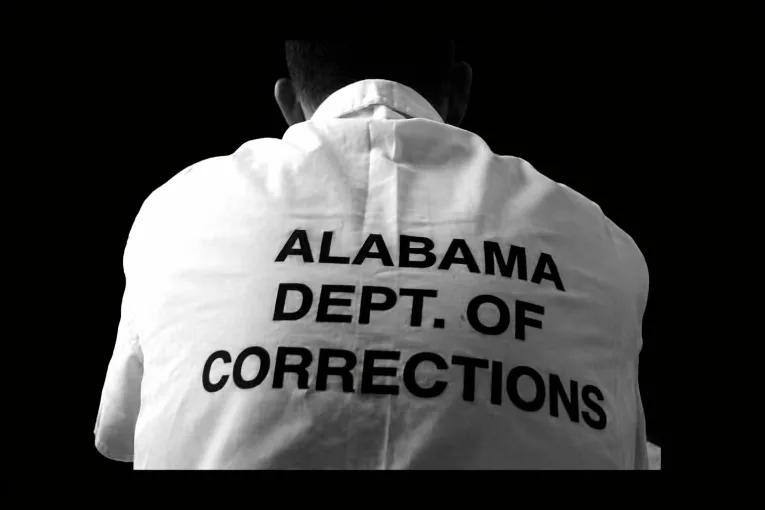
Last week, I appeared—remotely—from a California prison cell on a panel at North Central College in Naperville, Illinois. The occasion was a screening of the Oscar-nominated documentary The Alabama Solution, a film that chronicles the retaliatory violence and systemic repression faced by incarcerated organizers in Alabama.
I have participated in many interviews over the past decade as an incarcerated journalist. But this was different.
As students, faculty and community members filled the auditorium, I experienced a feeling that is difficult to articulate: humility mixed with a quiet sense of accomplishment. Not pride in personal recognition—but in collective struggle. The film they had gathered to watch was born out of work many of us began years ago with the Free Alabama Movement. What started as prison labor strikes and contraband phone interviews had evolved into a documentary seen on the world stage.
From a prison cell, we helped create a narrative that could not be buried.
My journey as an incarcerated journalist began in 2014 after the publication of my book Domestic Genocide, which examined systemic racism and the prison pipeline. Through a mutual connection, I was introduced to organizers within the Free Alabama Movement.
At the time, I was housed in a maximum-security facility in Northern California. We used contraband cell phones—not as gadgets of defiance, but as tools of democratic participation.
Those phones allowed us to document conditions, organize nationally and connect directly with journalists and advocates. When official channels were closed, we built our own.
That work was not theoretical. It was urgent.
Inside prisons, information is tightly controlled. Official press releases sanitize reality. “Approved” prison newspapers often function as house organs—permitted to publish redemption narratives but prohibited from investigating staff abuse, medical neglect or systemic retaliation.
So we built what I now call forward-looking journalism: reporting that does not simply ask how individuals can change, but how institutions must.
Over time, our network expanded. We collaborated with independent media outlets, policy researchers and universities. We hosted online forums. We documented the spread of COVID-19 inside prisons, contradicting public claims that incarcerated people were being protected. We filmed conditions that the public was never meant to see.
It was this synergy—between incarcerated organizers, outside journalists and advocacy networks—that eventually helped make The Alabama Solution possible. The documentary exposes how Alabama prison officials responded to peaceful labor strikes with solitary confinement, violence and communication blackouts.
Watching the film’s trajectory—from underground organizing to an Oscar nomination—I felt a profound sense of humility. Not because the story was finally visible, but because so many people risked everything to make it visible.
Yet as the panel discussion unfolded at North Central College, another realization emerged—one that should concern anyone who cares about the First Amendment.
The mechanisms used to silence incarcerated journalists are no longer confined to prison walls.
For decades, prisons have functioned as laboratories for speech suppression. Courts have granted correctional administrators extraordinary deference under the logic of “security.” Mail is censored. Phone calls are monitored. Publications are banned. Retaliation for reporting misconduct is common but difficult to litigate. Access to technology is criminalized.
In this controlled environment, lawmakers and officials test the boundaries of how far speech can be restricted under the guise of order.
What begins in prison rarely stays there.
Today, we see increasing efforts across the country to discredit journalists as enemies of the state, restrict access to public records, penalize whistleblowers and concentrate control over information flows.
We see strategic lawsuits designed to intimidate reporters.
We see legislation that narrows protest rights and expands surveillance authorities.
We see public officials attempting to define which journalists are legitimate—and which are not.
For those of us who have lived under the most extreme forms of institutional censorship, these developments feel familiar.
In prison, administrators often frame investigative reporting as a threat to safety. They argue that exposing abuse undermines morale or incites unrest. Courts frequently accept these rationales with minimal scrutiny.
The result is a parallel speech regime: one in which constitutional protections exist in theory but are diluted in practice.
The danger is not merely that incarcerated journalists are silenced.
The danger is that society becomes accustomed to the idea that certain classes of people can be excluded from meaningful speech protections.
When that principle takes root, it is only a matter of time before it expands.
At the panel in Naperville, students asked thoughtful questions about the relationship between prison censorship and broader democratic decline. Their curiosity gave me hope. But hope must be paired with vigilance.
The First Amendment is often celebrated as a cornerstone of American identity. Yet its strength depends not on rhetoric, but on application—especially in unpopular contexts.
If we tolerate censorship in prisons because the people affected are incarcerated, we normalize a hierarchy of speech rights.
And hierarchies are contagious.
The screening of The Alabama Solution was a moment of recognition—not only for the Free Alabama Movement, but for the idea that truth can emerge from the margins.
It affirmed that incarcerated people are not merely subjects of stories.
We are storytellers, analysts and witnesses.
But it also underscored how fragile that space remains.
The same institutional structures that once attempted to suppress our reporting—restrictive communication policies, vague security justifications and retaliatory discipline—are now mirrored in efforts to marginalize critical journalism outside prison walls.
When officials frame investigative reporting as destabilizing, when access to information is narrowed under broad security claims, when power determines credibility, democracy contracts.
Prisons have long been America’s democratic blind spot.
What happens behind walls is treated as exceptional, disconnected from civic life. Yet prisons are public institutions funded by taxpayers and governed by law.
They are not constitutional voids.
If anything, they are pressure points where constitutional principles are tested most intensely.
My participation in the North Central College panel was made possible by years of collaboration between incarcerated and free-world advocates who refused to accept silence as inevitable.
That collaboration is what the United Black Family Scholarship Foundation seeks to cultivate more intentionally: a school of forward-looking journalism rooted in accountability, ethical partnership and systemic critique.
The goal is not confrontation for its own sake.
It is transparency.
I do not romanticize the risks. Reporting from prison carries consequences. Housing assignments can change. Privileges can disappear. Informal retaliation is difficult to prove but easy to feel.
Yet the alternative—silence—carries its own cost.
When incarcerated voices are excluded from public discourse, society loses access to firsthand knowledge about state power in its most concentrated form.
Without that knowledge, oversight weakens.
Abuse festers.
Democratic norms erode quietly.
Standing—virtually—before students in Illinois, I felt the weight of that reality. I also felt gratitude.
Gratitude that the work begun with contraband phone calls and underground organizing could reach an academic auditorium.
Gratitude that young people are willing to interrogate systems rather than accept official narratives.
Gratitude that collective struggle can yield cultural impact.
But accomplishment should not breed complacency.
If prisons have served as testing grounds for speech suppression, then defending incarcerated journalists is not a niche concern—it is a democratic imperative.
The wall between prison censorship and public censorship is thinner than we imagine.
The lesson of The Alabama Solution is not only that repression exists.
It is that resistance, when networked and persistent, can pierce isolation. It can transform local struggle into national conversation.
The question now is whether we will recognize the warning embedded in that story.
For years, incarcerated organizers were told their voices did not matter. That no one would listen. That security concerns outweighed speech rights.
Yet the documentary’s nomination proves otherwise.
The public will engage when given access to unfiltered truth.
Journalism—whether produced inside or outside—must remain free to challenge power.
If we allow exceptionalism in one domain, we invite erosion in another.
I am humbled by how far this journey has come—from a maximum-security cell to a college auditorium screening an Oscar-nominated film connected to our work.
From clandestine phone calls to public panels.
From isolation to dialogue.
But humility also demands honesty: the struggle for free expression is not over. It is evolving.
Prisons showed us what speech suppression looks like in its most distilled form.
The task now is to ensure that those tactics do not become normalized elsewhere.
Ivan Kilgore is an incarcerated author, activist, archivist and founder of the United Black Family Scholarship Foundation (UBFSF), a 501(c)(3) nonprofit he established in 2014 from a maximum-security prison in Northern California.
